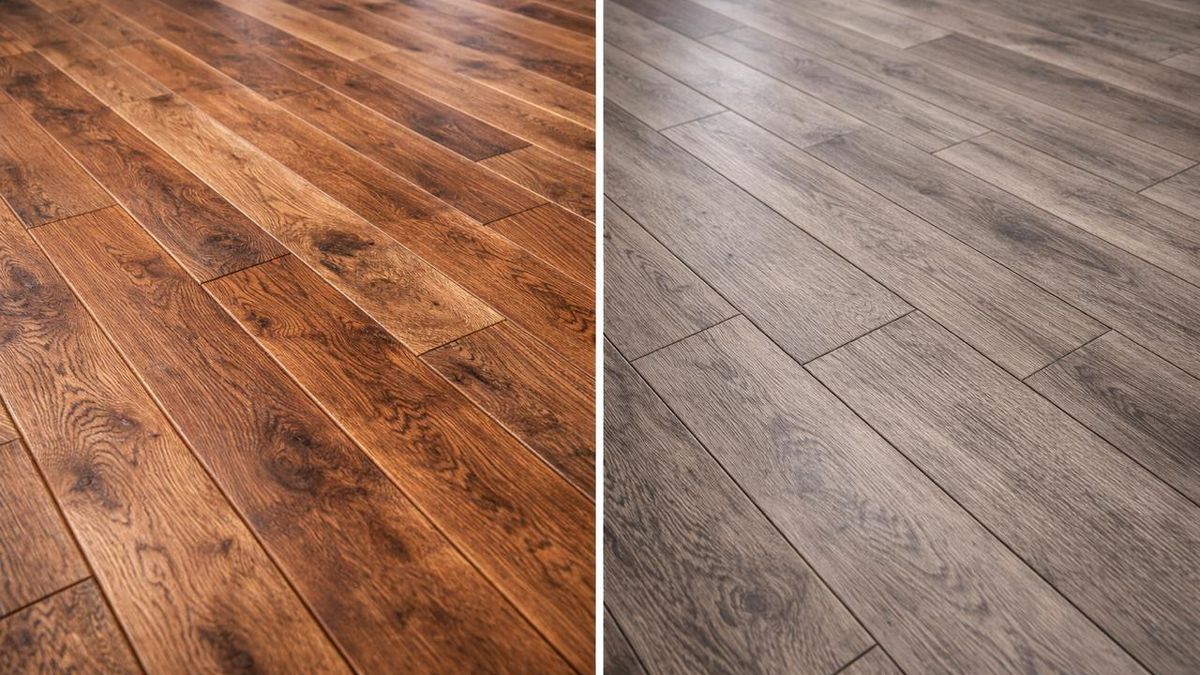
If you're a Dallas-Fort Worth homeowner planning a flooring upgrade, you've probably narrowed your choices down to two top contenders: traditional hardwood and luxury vinyl plank (LVP). Both are beautiful, popular, and available in a huge range of styles — but they perform very differently in the unique conditions of North Texas. Let's break down the key differences to help you make the best decision for your home.
The Texas Climate Factor
This is where the conversation gets real for DFW homeowners. North Texas is known for dramatic humidity swings — brutally hot, humid summers followed by dry, cooler winters. Those fluctuations wreak havoc on natural wood. Solid hardwood expands when humidity rises and contracts when it drops, which can cause gapping, cupping, and even buckling over time.
Engineered hardwood handles this better than solid, thanks to its layered construction, but it's still a natural product that responds to moisture changes. If you choose hardwood in DFW, proper acclimation before installation and maintaining consistent indoor humidity (between 35% and 55%) with your HVAC system is essential.
LVP, on the other hand, is 100% synthetic and completely waterproof. It doesn't expand or contract with humidity changes, making it naturally suited to the Texas climate. It won't warp if your AC goes out for a weekend in July, and it won't gap during a dry January cold snap. For climate resilience alone, LVP has a significant edge in DFW.
Durability & Lifestyle
Hardwood is undeniably durable — a well-maintained oak floor can last over a century. However, it's susceptible to scratches from pets, dents from dropped objects, and water damage from spills that aren't cleaned up quickly. If you have large dogs, active kids, or high-traffic areas, hardwood requires more vigilance and maintenance to keep looking its best.
LVP is engineered for abuse. The top wear layer resists scratches, stains, and dents far better than wood. Most quality LVP products are rated for heavy commercial traffic, so they can easily handle the demands of a busy DFW family. And since it's waterproof, you can install it in kitchens, bathrooms, laundry rooms, and basements — places where hardwood is typically not recommended.
Appearance & Feel
This is where hardwood still reigns supreme for many homeowners. There's an undeniable warmth, depth, and authenticity to real wood that's difficult to replicate. Each plank has unique grain patterns, and hardwood develops a beautiful patina over time. It also adds a premium feel underfoot and a resonant warmth that synthetic products don't quite match.
That said, modern LVP has come remarkably far. Today's top-tier LVP products feature embossed-in-register (EIR) textures that mimic wood grain so closely that many people can't tell the difference from a standing height. Colors, plank widths, and finishes now rival hardwood's variety. While purists will always prefer the real thing, LVP's aesthetics have reached a point where most guests won't know it's vinyl.
Cost Comparison
Cost is often the deciding factor, and here's where the numbers land for typical DFW installations:
- Solid hardwood (installed): $8–$14 per square foot
- Engineered hardwood (installed): $6–$12 per square foot
- Luxury vinyl plank (installed): $4–$8 per square foot
For a typical 1,500-square-foot DFW home, that difference can mean $3,000 to $9,000 in savings by choosing LVP. Installation is also generally faster with LVP — many click-lock products can be installed in a day or two, while hardwood often takes three to five days including acclimation time.
However, hardwood adds more to your home's resale value. Real estate agents consistently report that hardwood floors are a top feature buyers look for. While LVP is increasingly accepted, hardwood still commands a premium in the Dallas-Fort Worth housing market, especially in upscale neighborhoods like Southlake, University Park, and Highland Park.
Maintenance & Longevity
Hardwood requires periodic refinishing — typically every 7 to 10 years — which costs $3 to $5 per square foot but completely renews the floor's appearance. Between refinishes, you'll need to be careful with water, use furniture pads, and keep up with sweeping and occasional wood-specific cleaning products.
LVP is virtually maintenance-free. Sweep, vacuum, and mop with any standard cleaner — that's it. The downside is that LVP cannot be refinished. When the wear layer eventually wears through (typically after 15 to 25 years, depending on quality), the floor needs to be replaced entirely. Hardwood, by contrast, can be refinished multiple times over its lifetime.
Our Recommendation
Choose hardwood if: You prioritize timeless aesthetics, plan to stay in your home long-term, have controlled indoor humidity, and want maximum resale value. It's the classic choice for living rooms, dining rooms, and bedrooms in DFW homes.
Choose LVP if: You want maximum durability, waterproof performance, lower upfront cost, and minimal maintenance. It's the smart choice for families with kids and pets, kitchens, bathrooms, and rental properties.
Many of our DFW clients actually choose both — hardwood in the main living areas and LVP in kitchens, bathrooms, and kids' rooms. It's the best-of-both-worlds approach, and we can help you select products that coordinate beautifully across your entire home.
Not sure which flooring is right for your DFW home? We'll bring samples to your door, assess your space, and give you an honest recommendation.
Get a Free EstimateFrequently Asked Questions
Is LVP or hardwood better for Texas homes?+
LVP is generally better for Texas homes due to its waterproof properties, resistance to humidity fluctuations, and durability against scratches. Hardwood is the premium choice for beauty and home value.
How much does LVP cost compared to hardwood in DFW?+
LVP installation in DFW typically costs $3-$8 per square foot, while hardwood runs $6-$15 per square foot including installation. LVP offers significant savings especially for larger areas.
Does LVP look as good as real hardwood?+
Modern LVP has remarkably realistic wood-grain textures and visuals that fool most people. However, real hardwood has a warmth and character that vinyl cannot fully replicate, especially in hand-scraped or wide-plank styles.
Which flooring is better with pets?+
LVP is significantly more pet-friendly — it's scratch-resistant, waterproof, and easy to clean. Hardwood can scratch from pet nails and is vulnerable to water damage from accidents.